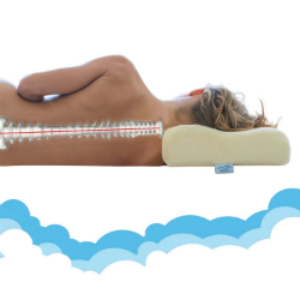
 Believe it or not, what you do in your sleep can greatly affect your spine! While it is hard to control what you do in your sleep, sleeping in optimal positions can help reduce stress on your spine.
The most common sleeping position is on your side. About 69% of people say they are side sleepers. There are many benefits to sleeping on your side but it can put your neck or low back at as disadvantage. When sleeping on your side, make sure to keep a pillow between your knees. This will level out your pelvis and neutralize your low back. You also want to make sure your neck is in a neutral position. You don’t want it propped up too high or too low. That is why we suggest the contoured pillows we carry here in the office at YFC. The contour follows the natural curve of the neck and allows perfect support throughout the night.
Another great sleeping position is on the back. This actually places the least amount of stress on the spine. Just like with side sleeping, you also want to make sure you have the proper support for your neck. Again, our contoured pillows are perfectly made to fully support your neck while on your back as well. When sleeping on your back, it’s also a good idea to have a pillow under your knees. This will take even more pressure of of your low back and give you a perfectly restful night’s sleep.
The worst sleeping position for your spine is sleeping on your stomach. This is harmful for your spine in a few different ways. First, it places a lot of stress and pressure on your neck because you are forced to turn your head to one side. More stress and pressure is also placed on your low back because it forces it into a hyper-extended position. While sleeping on your stomach may feel comfortable, it is actually harming your spine every night. So if you are a stomach sleeper, try to start training yourself to sleep on your side or back!
Dr. Meghan
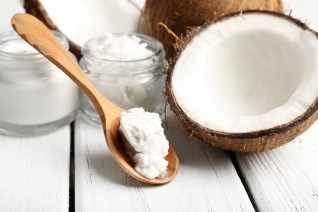 There has been a lot talk about coconut oil lately and if it is actually good or bad for you. A study was recently published by the American Heart Association (AHA) connecting saturated fats to heart disease. The AHA is stating that coconut oil raises cholesterol, which in turn will cause heart disease. This is actually true, but only partly. Coconut oil will increase your HDL cholesterol (“good cholesterol”). So while the overall total cholesterol does go up, it is only due to the rise in HDL numbers.
 Fruit juice is one of the most common drinks given to children. Did you know that it could actually be harming your child? Just this year, the American Academy of Pediatrics warned parents that children under the age of 1 should not be given fruit juice at all. They reported that too large of quantities of juice can lead to energy imbalances, digestive issues, tooth decay, and metabolic distress.
 Yost Family Chiropractic - (515) 278-YOST